
Paid in Salt
Your salary is salt — sort of
"Salary" really does come from the Latin for salt. Whether Roman soldiers were actually paid in it is a better story — because the honest answer has a receipt.
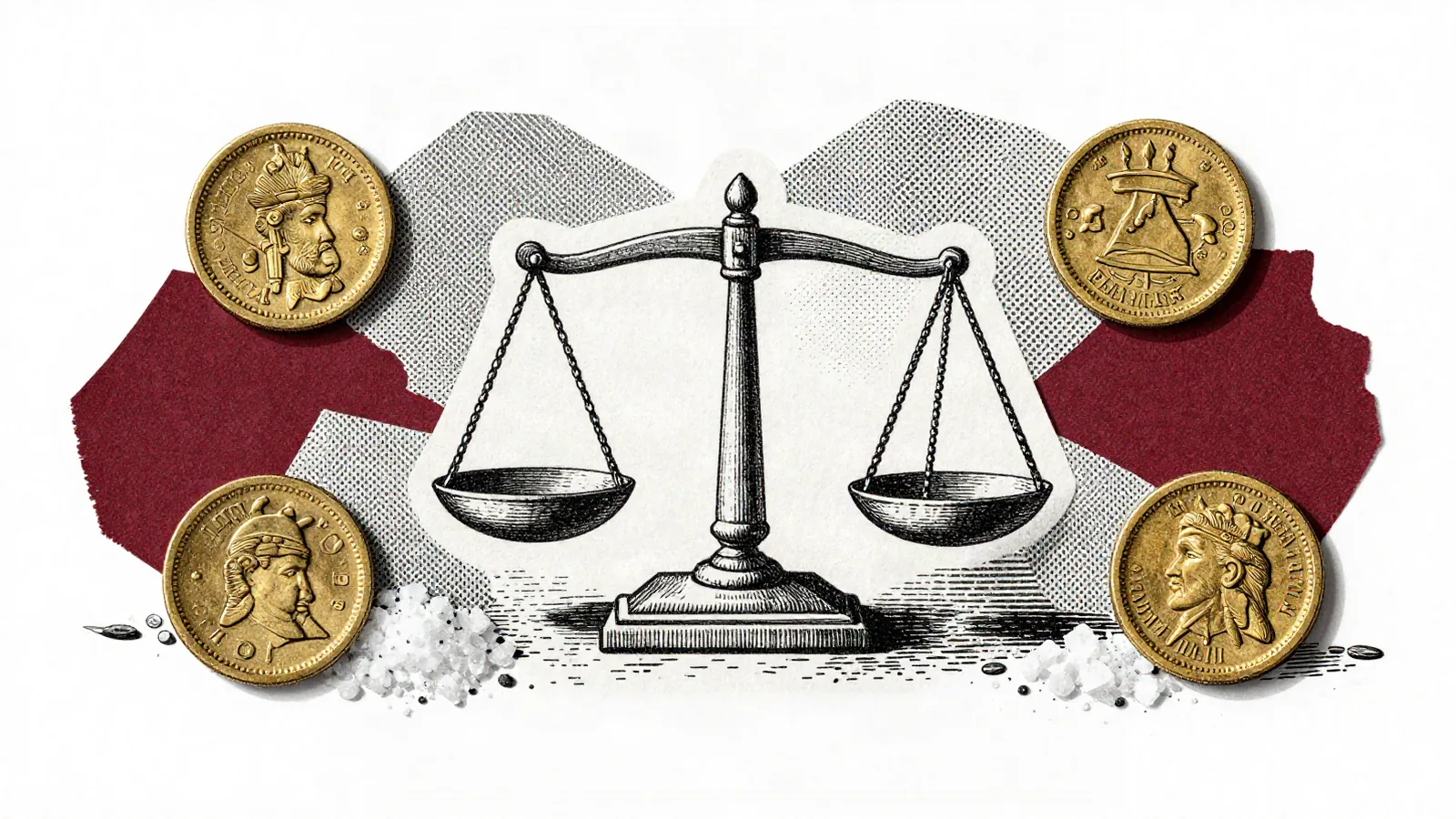
Look at your payslip. The word at the top of it is two thousand years old, and it smells faintly of salt. Salarium — a Roman allowance — sits inside “salary” in English, salaire in French, Salär in Swiss and Austrian German.
The story everyone tells
The popular version says legionaries were paid in salt itself: white gold, handed over by the sack. It’s tidy, it’s memorable, and it’s almost certainly too tidy.
The receipt
Here is the entire ancient basis for the story — one sentence, written by Pliny the Elder in the first century AD, in a book about salt: “honoribus etiam militiaeque interponitur, salariis inde dictis” — salt was bound up with honours and with military service, “salaries” being named from it. That’s it. Pliny explains a word. He does not say a single soldier was ever handed salt instead of pay, and no other surviving Roman author does either. What the sources actually show is money, sometimes money paid for salt — not wages shovelled out in crystals.
So where did the legend come from?
A dictionary guess. The classicist Peter Gainsford traced the literal version to Facciolati and Forcellini’s Latin lexicon of 1771, which speculated that salarium was salt revenue “once given to soldiers” — reasoning by analogy to calcearium (“shoe money”) and vestiarium (“clothing money”), terms that are actually attested. That guess hardened into fact over the next century.
It is still hardening. Open Lewis and Short — the Latin dictionary handed to students today, free online from Tufts — and under salarius you will read: “the money given to the soldiers for salt, salt-money.” A 250-year-old speculation, printed as a definition, cited from the same Pliny sentence that never said it.
Why this is the channel in miniature
A word you use every payday carries a receipt from the ancient world — and the receipt says something more interesting than the legend. That gap between the story and the tablet is exactly where these films live.
Everything started somewhere.
Sources
- Pliny the Elder, Natural History, Book 31.89 — the Latin text of the one ancient sentence the whole story rests on (LacusCurtius/Bill Thayer)
- Lewis & Short, A Latin Dictionary (1879), entry "salarius" II.B — the standard student Latin dictionary, still stating the salt-payment claim as fact (Perseus Digital Library, Tufts University)
- Peter Gainsford (PhD, Classics), "Salt and salary: were Roman soldiers paid in salt?" — traces the literal claim to Facciolati & Forcellini's 1771 Latin lexicon and its popularization in English from the 1860s
- Etymonline — "salary" (salarium)